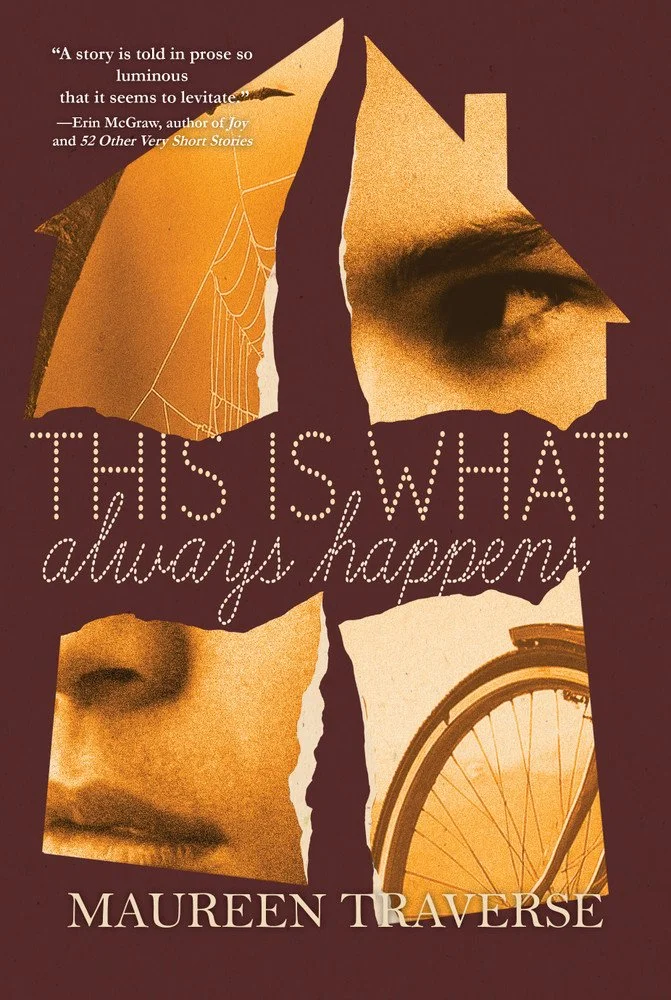
On a summer night in 1998, seventeen-year-old Dean Banville survives a suicide attempt. Like a supernova bending the fabric of spacetime, that single moment hurls Dean and everyone who loves him into an unfamiliar orbit.
His estranged parents reunite under one roof, determined to keep their son alive even as old fractures threaten to reopen. His older sister, Erica, cannot escape the memory of how close she came to losing him. Dean’s best friend, Andy Lawrence, longs to help him heal, only to realize his feelings run deeper than friendship—a truth that could cost him the acceptance of his deeply religious family.
As Dean, Andy, and Erica struggle to escape the gravity of that night, they are drawn together by questions as vast as the universe and as elusive as quantum physics. But when another devastating loss shatters the fragile future they have begun to imagine, Dean is forced to confront the far-reaching consequences of one impulsive act—and whether redemption is possible after the people you love have paid the price.
Praise for This is What Always Happens
“This Is What Always Happens, promises Maureen Traverse’s new book, but readers might not be so sure. It doesn’t always happen that characters are realized in startling, hungry, heartbreaking detail. It isn’t always that a story is told in prose so luminous that it seems to levitate. It is breathtakinigly rare to find families and friendships explored with such compassionate precision, such deep understanding, and such care. A teenage boy makes an impulsive mistake, and the trajectory of every life around him changes. Maybe this is what always happens, but Maureen Traverse’s exquisite intelligence allows us to understand in new and unforgettable ways.”
—Erin McGraw, author of Joy and 52 Other Very Short Stories
“This is What Always Happens is a study in empathy, honesty, and generosity, and Maureen Traverse captures the most tender nuances of her characters’ inner lives. The hopefulness here is hard-won, and Traverse understands how family can push you to the brink of despair but also rescue you from it.”
—Holly Goddard Jones, author of Antipodes and The Next Time You See Me
“This is What Always Happens is the best book I have ever read about time, and what it means, and what we do with it. And that’s not even the only thing it’s about. Loss and longing, the brain and the body, compassion, hunger, love—Maureen Traverse knows about these things, and what this book has to say about them is an antidote to the coldness all around us.”
—Kyle Minor, author of Praying Drunk and How to Disappear and Why

About Maureen
As a child, I narrated stories in my head before I knew how to write. My mother, a high school English teacher, would describe the plots of Jane Eyre and Wuthering Heights to my sisters and me while she graded papers. My father, an extroverted bookstore manager with a laugh that carries into the next room, would regale us with stories of his own childhood.
Both of my sisters could draw, but I lacked any ability in visual art, so I gravitated toward writing dark poetry and science fiction. In high school, I found The Best American Short Stories at the library and decided with the seriousness only a teenage poet possesses that this was the fiction I wanted to write, stories that dug deep into the ordinary to uncover extraordinary insights and prompted me to consider lives and perspectives much different than my own.
In college at Loyola University of Maryland, I met working writers for the first time, attended readings, and started imagining life as a writer. My twenties seemed to take me in reverse. I left a practical, federal job at the Smithsonian in Washington, DC to earn an MFA in Creative Writing at The Ohio State University.
One night after too much wine, my friends invited me to move with them to New York City. That fall after graduation, with no job, little money, and no idea what my next step in life would be, I took the train to New York and spent my first month sleeping on the kitchen floor of a sublet. I worked in the rare book room at Strand Bookstore and fell in love with the gorgeous city that whirled around me. Before long, I’d also fallen in love with my husband, a musician and fellow writer.
While I found writing fulfilling, I knew it would never feed me or pay my rent. My husband’s friend connected me with a grassroots labor advocacy organization and launched my career in the non-profit world. Eventually, we made our way back to Columbus so my husband could earn his MFA and I found work with Mental Health America of Ohio.
I started out answering the phone and listened as people shared their stories of living with mental illness or struggling to find help for family members. I led the agency’s first peer training program, helping people with lived experience become certified to support others in recovery.
Becoming a mother and working full time meant I had to change my writing habits, but it also challenged me with bigger love and more complicated fears than I’d ever known, emotion that seeped out into my writing. After eight years in Ohio, we relocated to Watertown, Massachusetts, and maybe now I’ve finally settled down.
My short fiction has appeared in StoryQuarterly, CutBank, and The Masters Review. I’m thrilled that my novel, This Is What Always Happens, has found a home with Regal House Publishing. The manuscript was on the shortlist for the 2022 Southeast Missouri State University Press Nilsen Prize, the first chapter was short-listed in the 2019 Craft First Chapters Contest, and the year before, I was awarded a Vermont Studio Center fellowship based on an excerpt.
Writing fiction and working in social services have marked me in similar ways—building empathy and challenging me to explore perspectives that are stigmatized. Mental illness confounds our desire for meaning, closure, and moral certainty.
In fiction, I have circled these ideas again and again: to what extent is a person responsible for symptomatic behavior? Who bears the blame when that behavior causes suffering? What in our lives can we control and what lies beyond our control? Where is the line between identity and illness? How do we create justice when we are so flawed?
Through my work, I hope to broaden conversations about the human condition and give voice to experiences that are often overlooked.
Short Stories
“Year of the Bimbo” —The Masters Review
“Night Music” — 100 Words
“Wind Up” — elimae
“Johnny, Be Good” (excerpt) — CutBank